
Essential guide
What Is Chinese Tea Oil?
Chinese tea oil is an edible oil pressed from Camellia oleifera seeds. Learn its names, origins, uses and how it differs from tea tree oil.
Direct answer
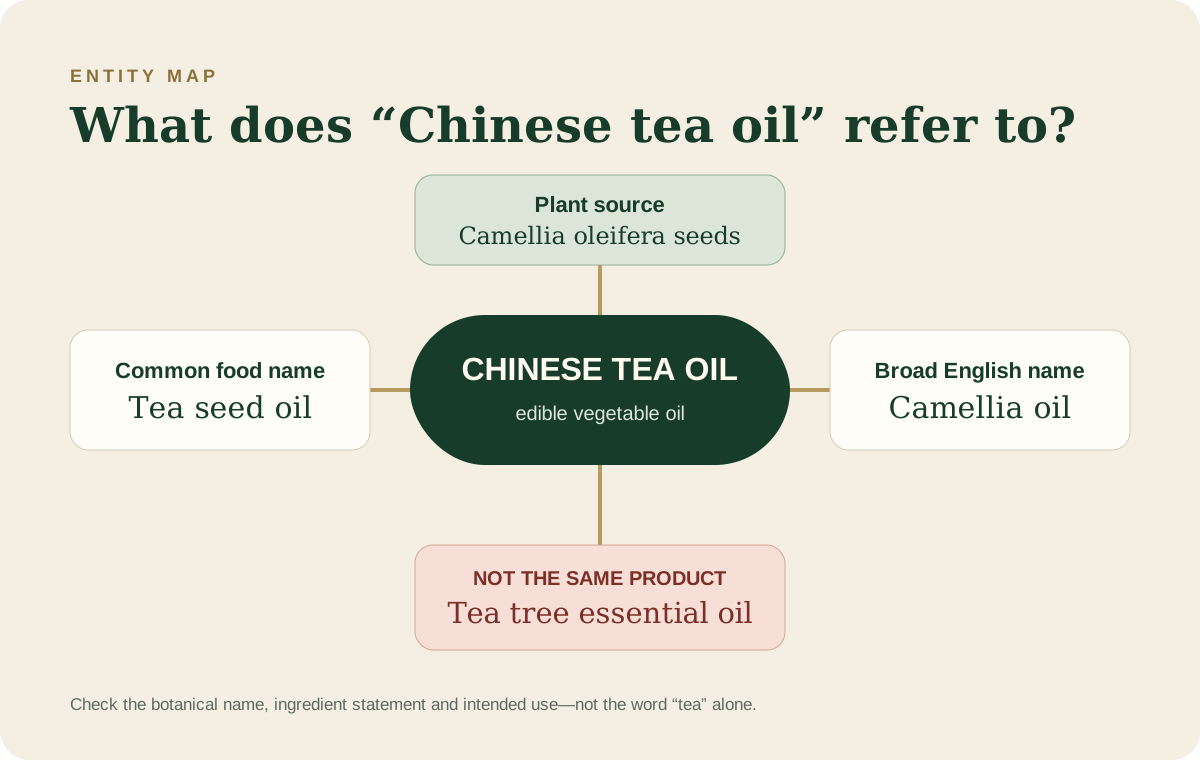
Chinese tea oil is an edible vegetable oil made from the seeds of Camellia oleifera, a tree cultivated in southern China. In English it is also called tea seed oil or camellia oil. It is a cooking oil, not tea tree essential oil.
Key facts
- Plant
- Camellia oleifera
- Oil source
- Seeds
- Common English names
- Chinese tea oil, tea seed oil, camellia oil
- Traditional origin
- Southern China
- Primary category
- Edible vegetable oil
One oil, several English names
The terminology is less settled than it is for olive oil or sesame oil. Chinese producers may translate the same product as tea oil, tea seed oil, oil-tea camellia seed oil, camellia seed oil or Camellia oleifera seed oil.
For readers, the most useful check is the botanical name. An edible Chinese tea oil label should identify the seed source, ideally as Camellia oleifera. The botanical name also prevents confusion with unrelated essential oils.
Why the word ‘tea’ can be confusing
Camellia oleifera belongs to the same plant genus as Camellia sinensis, the plant used to make drinking tea. The oil, however, is pressed from seeds rather than brewed from tea leaves.
Tea tree oil comes from Melaleuca alternifolia, a different plant. It is an essential oil intended for topical or aromatic uses and should not be treated as an edible substitute for tea seed oil.
How Chinese tea oil is used
In food, tea seed oil can be used for dressings, sautéing and other cooking methods when the specific product label permits them. Flavor and heat performance vary with seed quality, extraction and refining, so a single number should not be assumed for every bottle.
Chinese regional food traditions also use tea oil in dishes associated with local growing areas. This guide keeps that point deliberately broad: a regional example needs a named place, recipe context and source rather than being presented as one uniform Chinese food culture. For a practical label check, see our buying guide; for measured composition ranges, see the fatty-acid profile.
What this guide does not claim
An oil’s fatty-acid profile does not by itself prove that the product prevents or treats a disease. Pure Oleifera separates composition data, laboratory research and human clinical evidence instead of turning them into unsupported health promises.
Source notes
References used on this page
- 01Kew Science — Plants of the World Online search for Camellia oleifera
- 02NCBI Taxonomy Browser — Camellia oleifera
A database search page helps readers locate the literature; it does not mean every indexed study supports every claim. We identify individual studies when discussing a specific result.
This page was reviewed on July 25, 2026. See our editorial policy or report an error.